
Close Your Skill, Experience, Or Resource Gaps

Have you noticed something interesting about most filmed interviews by non-professionals (e.g. people that do not work in the media)? The non-professionals looks terrified. They are nervous, wooden, shifty, and look scared of the camera. This undermines the entire interview.

In fact, it undermines the entire tactic… perhaps even a huge percentage of the strategy.

Can you imagine going through all this effort, only for the interview to be ruined by the presenter?

This is a skills gap. The presenter has likely never been on camera before. They do not know the best body language to adopt, where to look, how long to look at the camera, what to do if they become uncomfortable, etc. They might not know that they need to exaggerate their personality to match the setting. This results in a wooden, underwhelming interview.

Along with knowledge gaps and resource gaps, skill gaps are one of the three gaps you need to fill before you execute a tactic. Too often, people overestimate their abilities and believe they can do something they have never done before really well. This is an arrogant (and, unfortunately, common) mistake to make.

You can correct this by identifying your skill gaps and taking action to close them.

What is a Skill?

Skill is your ability to perform a task. Knowledge is your understanding of the task. A simple analogy would be playing the piano. You could spend years studying (acquiring knowledge) to play the piano. But this doesn’t mean you would be able to play the piano. You wouldn’t have developed the instinctive skills to be able to play yet.

Likewise, you could teach a colleague everything you knew about sales. However, this doesn’t mean your colleague would be able to sell a project to a client at her first attempt. She wouldn’t have the skills yet. It’s hard to teach the tone of voice, expressions, understanding what’s not being said, etc. There are too many variables to teach this. Instead, she would need to develop an instinctive understanding.

Knowledge Gaps

Now you do the same thing, but for knowledge. Looking at the tasks above, what knowledge would you need that you don’t possess today?

Knowledge is anything that can be written down or passed along in a single medium to multiple people. The nature of knowledge makes this task difficult. You might not know what you don’t know. However, this too is something you can ask and find out by asking yourself “What don’t I know which I should know?”.

Look at the tasks above again. Are there any in there which probably require knowledge?

You would probably want to know:

  • How much to pay vendors
  • How to hire good vendors and work with vendors
  • How to entice experts to participate in interviews
  • How to set up a paid advertising campaign.

Each of these is information you can acquire relatively quickly. The key step is identifying what information you need to begin with.

This is where you need to have a simple knowledge acquisition plan. You might reach out to a few people who have done this before and find out what we should pay, who is highly recommended, what kind of things we should watch out for.

Likewise, you can find a few relevant online communities (aha!) and ask in there. For the really important tactics, you want to be prepared with all the knowledge we need to make it happen.

Resources

Finally, you need to make sure you have the resources in place to perform these steps well. This is a relatively easier step. It usually comes down to permission, budget, and human resources.

Is your organization okay with you taking the steps you need to take?

Are they willing to pay vendor invoices promptly and help promote your work where necessary? What information do they need from you to pay invoices? What do you need to pay invoices?

Are they willing to give you the human resources you need to make this work here?

It should be relatively simple to scroll through the list of steps outlined here and check. Is there any step that requires anything from your organization which you do not currently have? These will include:

  • Budget set aside and vendors to be paid promptly
  • Internal support for analytics and measuring
  • Embedding the video on the main news page.

List Your Skill, Knowledge, and Resource Gaps

You should now be able to develop a specific list of gaps you need to close.

Task

Gap

Details

Create a list of contacts to interview. Resource Permission to interview any expert I like without any further approvals.
Schedule calls with experts and identify those who have something interesting to say. Knowledge How to entice experts to participate in interviews.
Find and book a film studio for interview. Skill Negotiating with vendors.
Knowledge How much to pay vendors.
How to hire good vendors and work with vendors.
Resource To agree deals and pay vendors promptly.
Arrange travel for the expert. Resource Ability to arrange travel and reimburse expenses.
Book a photographer for imagery. Skill Negotiating with vendors.
Knowledge How much to pay vendors.
How to hire good vendors and work with vendors.
Resource To agree deals and pay vendors promptly.
Hire a designer for slide slides. Skill Negotiating with vendors.
Knowledge How much to pay vendors.
How to hire good vendors and work with vendors.
Resource To agree deals and pay vendors promptly.
Book an editor with availability to edit video. Skill Negotiating with vendors.
Knowledge How much to pay vendors.
How to hire good vendors and work with vendors.
Resource To agree deals and pay vendors promptly.
Select a video hosting platform. Skill Negotiating with vendors.
Knowledge How much to pay vendors.
How to hire good vendors and work with vendors.
Resource To agree deals and pay vendors promptly.
Film the interview. Skill Conducting interviews.
Presenting on camera.
Resource To publish the interview without prior approval internal.
Set up a reward scheme for referrals / sharing the video. Knowledge How to setup a referral scheme.
Resource To agree deals and referrals somehow.
Set up paid advertising to promote the video Knowledge How to set up a paid advertising campaign.
Resource To use a company credit card.

Closing Your Gaps

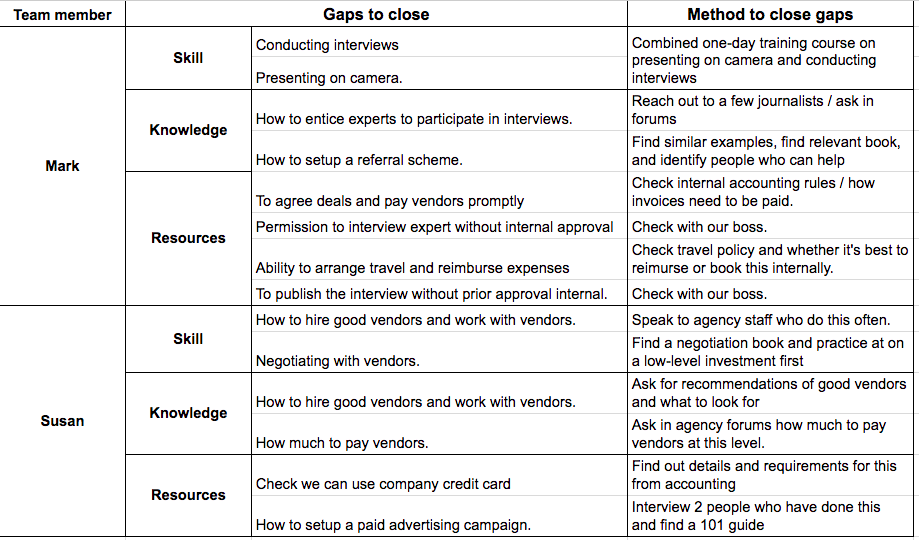
Once you have identified your skill, knowledge, and resource gaps, you want to help your team close those gaps. This should guide every investment and personal development decision you make. If you have a team member (or you) who will appear on camera, you should ensure they have time to practice being in front of the camera or attending a one-day training course.
screenshot-2016-10-05-14-13-16

Usually, closing the gaps is relatively simple. The hardest part is ensuring staff realize they do have gaps and they need to take the time to close them in advance.

Take the time to do these for each of your main tactics. Identifying the gaps should not take long. Gaps usually arise when you ask someone to do something they have never done before. Once you have identified the gaps, make sure people take action to close them before you try to execute the tactic.

Summary

  1. Identify skill gaps. What haven’t you done before which might be difficult?
  2. Identify knowledge gaps. What don’t you know?
  3. Identify resource gaps. Check if you have resources in place in advance.
  4. Close the gaps identified. Find the right training courses, experts, events, and ask peers (in online communities).
  5. This is only relevant to a minority of tasks. Many tasks don’t require significant skill, knowledge, or resources to complete.


Assign Steps To Your Team

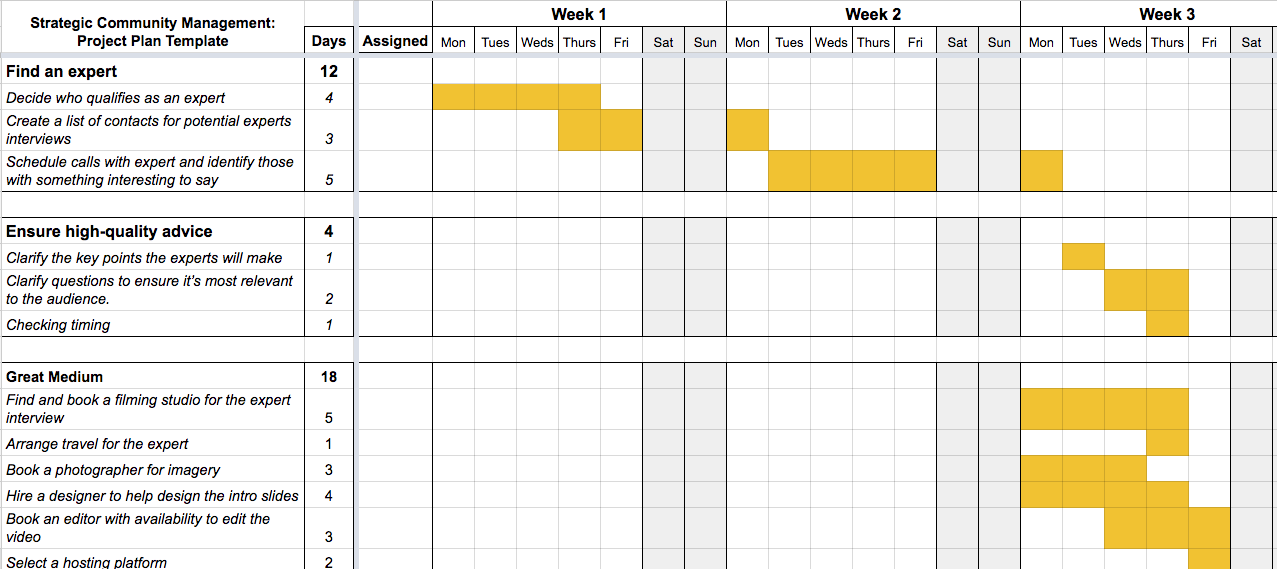
If you looked at the image from our project plan in the last chapter, you might notice that the ‘assigned’ column is blank. You have not yet assigned a specific person to perform each step. This almost guarantees the steps will not be completed. You have to assign steps to specific people to perform on specific days.

If you’re working as a solo community manager, this stage might be easy. You have to do every step whether you like it or not. If you have a team, you should consider carefully who is the best person to complete each task.

As tempting (and as efficient) as it might be to assign work to your colleagues, it’s usually better not to drop new work and responsibilities on them without their input. This is where egos and personalities can collide with tactics and derail your lovingly crafted strategy. You don’t want people to feel forced into the project.

You want them to be motivated and eager to contribute to the project. This is a bigger topic than we can cover here. However, one key principle really matters.

Don’t tell your team what to do, let them tell you what they want to do

This is a combination of abilities and passion. The most talented person is not going to do a great job on a task they do not enjoy. This is why you need to identify who has the talent to perform each task and who has the interest in performing each task. This concept was best explained by Jenn Lopez at Moz.


Avoiding disaster in team management

Here is a common situation. You’ve broken the plan down and assigned each of the steps to different members of your team. Everything is ready.

Then disaster strikes. Hardly anyone has done the work they were supposed to do. Worse yet, those that have done their tasks have performed poorly. Perhaps the emails they have written, or content they have created is barely usable.

What’s gone wrong?

It could be many things. Perhaps the most likely is the people you assigned to do the work simply didn’t want to do it. Perhaps it wasn’t aligned with their business objectives, or they didn’t enjoy that type of work? Perhaps they regretted someone else forcing extra work upon them? This is common.


Create a Task List

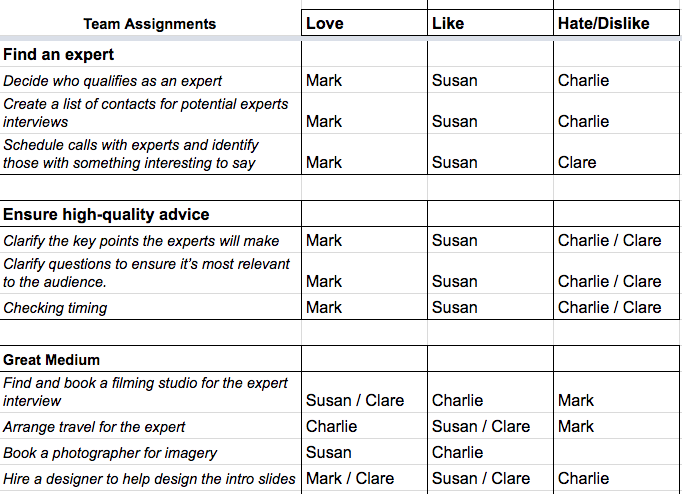
Create a list of the tasks that need to be done and share it with your team. Let your team identify the tasks they love, like, and hate. You might be surprised just how much people enjoy the kinds of tasks that you might hate. This will also highlight people who aren’t putting themselves forward for any task. Social pressure should compel everyone to highlight what they would most like to do and what they would least like to do.

screenshot-2016-09-26-08-10-12

Based upon this information, you will identify the best person for each task and assign a backup if they are unable to do it, or it’s not within their best skillset.

Summary

  1. Don’t assign actions to your team without their input.
  2. List the tasks and let your team identify what they love, like, and hate.
  3. Based upon this, assign tasks and identify a backup to each task.

Converting Tactics Into Specific Tasks And Steps

At this stage, you need to convert your tactics into very specific steps you and your team can perform.

This is also where you need to make compromises in exactly how good a tactic might be.

Let’s breakdown the steps involved in executing the ‘Experts Interviews’ tactic from earlier at a world class level.

Three Quick Definitions

  • Tactic = an action to fulfil your strategy. E.g. host a webinar with a guest expert.
  • Task = something that executes the tactic well. E.g. Find an amazing guest.
  • Step = a simple action needed to complete the tasks. E.g. Decide who qualifies as an expert.

How To Find A Great Expert

The first step is to find really great people.

  1. Decide who qualifies as an expert. This means scheduling calls with members and asking who they most admire. It means using a Google search to see who has the most influence within your sector. It means identifying who has spoken well at comparable events. It might mean identifying who has something new and interesting to say.
  2. Create a list of contacts for potential experts interviews. Build up a list of possible candidates to speak to ranked by order of priority. You will need the contact information of these. Collecting this contact information might involve networking, securing introductions, or otherwise searching around for some time.
  3. Schedule calls with experts and identify those with something interesting to say. Now you speak to each of the experts over a period of time and identify who would make good interview subjects. Who has something interesting to say? Who is entertaining? Who sounds enthusiastic? When are these experts available? You can schedule a large number of these over several months in one batch. A major part of this process is to establish relationships with the people you wish to speak to.

Great Advice

The next step is to make sure the message contains the best possible advice. This might include:

  1. Clarify the key points the experts will make. Undertake a pre-interview to identify the key points the expert will make.
  2. Clarify questions to ensure it’s most relevant to the audience. Ask your community to submit their questions in advance and make sure you are asking the most relevant questions to the challenges your audience faces.
  3. Checking timing. Check that you have enough time to ask these questions and prioritize questions by order of importance. Make sure your most important questions aren’t left out due to a lack of time. By the end of this, you should have a clear plan.

Great Medium

Next, we need to figure out what is the best medium for this interview. Is this a one-hour webinar or a professionally recorded session in a studio? What is likely to be most popular with your audience and what can you afford?

Let’s assume it’s the latter. This might include:

  1. Find and book a filming studio for the expert interview. You need to research possible venues, compare different studios, get quotes and references, check availability, and then pick a venue.
  2. Arrange travel for the expert. Now you need to arrange flights, pickup, hotels, and expenses with the expert.
  3. Book a photographer for imagery. If you want good photos from the interview to use in your promotion, you need to book a photographer (filming studio would probably take care of this).
  4. Hire a designer to help design the intro slides. Again, the film studio might cover this. However, if they don’t, you will need to hire a designer to help develop the intro slides and any images you want to incorporate into the interview.
  5. Book an editor with availability to edit the video. You might then need to find an editor who can edit the videos to a high standard and upload it for you (believe me, you don’t want to be doing this). This might mean researching options, asking for recommendations, creating a list, getting quotes, and booking time.
  6. Select a hosting platform. Now you need to decide where the video will be uploaded. Is this going to be on multiple platforms, or just one? This might be YouTube, Vimeo, Wistia, etc.

Big Audience

Finally, you need this video to reach as many of your members as possible. If it doesn’t, then everything else becomes moot. This might involve several elements.

  1. Write an email series to promote the expert. You might write an email series to solicit questions before the interview, and then promote the interview once it has been published.
  2. Arrange for other sites to cover the takeaways. You might strike partnership deals with other sites to provide segments of the interview for free in exchange for referrals to the content itself. You might also check to see if there is any newsworthy material that might extend beyond the initial interview.
  3. Creating a digest of key points. You might create a digest of key points and quotes which can be shared on social media platforms to promote the video once it is live. You can create a document with key quotes highlighted to be shared by others.
  4. Set up a reward scheme for referrals. You might set up some form of point reward scheme for people to share the video with their friends.
  5. Paid advertising. You might pay for advertising, either on social platforms or via Google on relevant keywords. This could also collect email signatures in exchange for keywords.

Jump Straight To Planning

Once you have done this for a single tactic, you can usually jump from your tactics to this planning stage.

The key thing is determining exactly what would make the tactic succeed at the best possible level and identify what needs to be achieved at each stage.

Summary

  1. Break down the distinct steps to make the tactic succeed. Be very granular at this level.
  2. Outline the number of days the steps will require and plot these on a GANTT chart.

Define World-Class Execution

It’s common to dive into a tactic without considering what world-class execution of the tactic might look like.

For example, you might invite a guest speaker to fill a weekly speaking slot. To do this, you could simply send out an invite to a few people, see who is available, record the session when they are free and post it online.

Job done.

But that’s hardly world-class execution of the tactic. With the resources we have made available to ourselves, now we only care about world-class execution of our tactics. Let’s try to do the example before at a world-class level.

Tactic:

Host a guest interview with a top expert

Key Elements of Execution

Details

Find an amazing guest You would need to find someone people respected, who was charismatic, who would take the time to deliver something good.
Terrific message Your speaker would have something new, controversial, different, or emotionally deep to share.
Great medium The production would be high-quality and perfectly match the viewer’s intent. This would not be an hour-long, unedited, webinar converted into a video file for others to download.
Big audience This wouldn’t be seen by just one or two people, but would reach most of the community.

If you managed to get all four of these, you can be sure the execution of the tactic would be as big as it could be.

You might not be able to do each of these, as your resources are too limited. However, once you know what world-class looks like, you can begin to make compromises from there. This also helps you explain to others what any additional time or resources could be used for.

Example: Newcomer questions

Let’s try this for another one of our five tactics from the previous chapter.

You can do this for another tactic: “Create and maintain a list of first-time questions for newcomers to ask to get started. These appear as members begin typing their question and in pop-up boxes on their first visit.

What would this tactic look like as a slapdash job and what would it look like if we put real thought and effort into it?

Let’s begin with the slapdash job. You would write up a list of questions you think newcomers might ask and put that into the onboarding emails. That wouldn’t take more than thirty minutes.

Now what would it look like if we really took the time and effort to do this well?

Tactic:

Create and maintain a list of first-time questions for newcomers to ask to get started. These appear as members begin typing their question and in pop-up boxes on their first visit.

Tasks

Details

Questions would match newcomers’ biggest fears and desires You would know how to get inside your newcomers’ heads and uncover their biggest fears and desires.
Questions that matched where newcomers came from You wouldn’t treat your newcomers as a homogenous mass. You might use a system to segregate what questions newcomers see based on where they came from and their current level of knowledge.
Technology optimized The questions would be optimized for whatever platform the newcomer would be using.
Right questions at the right time Newcomers would see the questions at the exact moment they are most likely to participate. This might be as they begin typing their question, they can see similar questions.
Excellent design The layout and design of the questions would be terrific and easy to understand.

Do you notice the huge difference in the execution of the same tactic?

This will completely change how effective this tactic is. And this is our goal. We want to execute a few tactics extremely well.

Imagine how much this changes your approach. What happens if, instead of recruiting the nearest community member to fill a gap in the content calendar, you instead spent time networking your way up to the biggest people in the scene? Perhaps book authors, the most talented professionals, or those that run key organizations?

The goal of going through this process is to take your key tactics and identify what world-class execution might look like. Consider how to take each to the next level in what you do. If you get this right, the efficacy of every tactic improves drastically.

A side benefit of this approach is your own motivation. It is easy to execute tactics at an average level and just go through the motions each week. It is far more motivating for both you and your team to execute tactics at an advanced level.

Summary

  1. List what would make execution of this tactic world-class.
  2. Make compromises from the ideal tactic, not from what’s acceptable.
  3. You only need to do this with your priority tactics.

Part Four – Developing The Action Plan

The goal of the action plan is to execute your tactics as effectively as possible.

When tactics do fail, it’s more likely to be an execution failure than selecting the wrong tactic in the first place. None of your tactics will succeed unless you truly plan out the key steps in advance and develop your plan accordingly.

It’s very easy to overlook this stage and believe that planning is an easy, low-value task. But this mentally will undermine all the hard work you have put in so far.

Fortunately, you can acquire some key skills to become better at executing really quickly.

What is Great Execution?

To be a great executor, you need to be a great project planner. Once you begin planning things in advance, you can spot potential problems and overcome them. You become adept at identifying every step required to execute your tactics extremely well.

You then need to identify how long each step will take, what resources (knowledge, time, money, permission) are required for that tactic, who has the availability and skill-set to undertake that tactic, and when that tactic will be undertaken.

Next, this means identifying the order these steps need to be performed in. Then identifying who is going to perform each step. Then finally ensuring these steps are performed in that order.

If you have a team, this is probably the level at which you can delegate to your team.

Select Your Key Tactics

The next step is to list these tactics by order of priority and select the biggest priority tactics. You will find you will not have the time or resources to execute all of these tactics.

Instead, you look for the key few tactics which will have the biggest impact.

This stage is also important if your resources change. If you later find you do not have the time or resources to execute tactics, you can begin removing them from the bottom up.

Reach , Depth, And Length Explained

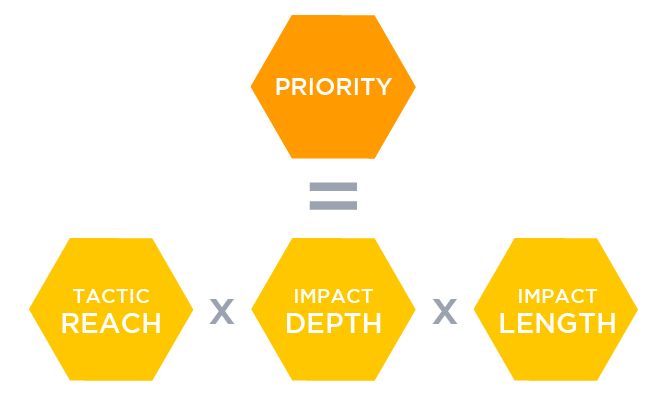
Reach: The % of the total target audience reached by the tactic. A one to one discussion has very low reach. An email that goes out to every member has very high reach. This is the % reach within the targeted audience (i.e. newcomers or existing members). A big part of executing a tactic is to figure out how to reach the maximum number of peopleTweet This .

Depth: This is the impact of the tactic upon each member. Depth is the extent to which the tactic affected the behavior of each person it reached. A one to one discussion might have low reach but a lot more depth than a generic email that goes out to everyone.

Length: This is how long the tactic continued to affect the target audience for. A webinar, for example, might have good reach and depth, but may not have an enduring impact upon the community. Length is either the length of time a tactic continued to reach and change people, or the length of time the behavior is changed for.

Tactics List

Strategy

Get regular members to feel jealous of top experts and encourage others to share their tips to also be recognized as an expert by their peers

Category

Tactic

Reach

Depth

Length

Events and activities Create a customer council of top community members. Publish the list and allow for nominations. (8) Medium High High
Content Interview experts who share the most tips. (7) Medium High Medium
Moderation Add a ‘star’ or ‘recognized expert’ next to those who collect the most likes on their tips. (7) Medium Medium High
User Experience List the number of tips shared or likes received next to each contribution of experts. (7) High Low High
Moderation Provide top experts with moderation rights. (6) Low High Medium
User Experience Provide guest columns to top experts that appear in a featured area. (5) Low Medium Medium
Content Solicit the opinions of top experts on regular news items. (5) High Low Low
Influence @Mention a top expert into relevant discussions. (4) Low Medium Low
Moderation Turn tips created by top experts into sticky threads more frequently. (3) Low Low Low


Strategy

Ensure regular members feel confident to ask questions

Category

Tactic

Reach

Depth

Length

Growth Create and maintain a list of first-time questions for newcomers to ask to get started. Insert this into the onboarding. (8) High Medium High
Growth Create a clear guide to asking for help for the first time. Highlight what not to say and what to say. (7) Medium Medium High
Growth Enforce a strict don’t bite the newcomer policy, even for the really obvious/most repeated questions. Ensure first contributions get a warm, positive response. (7) High Low High
User Experience Create a list of current members the newcomer might already be connected to / know through social accounts. Medium Low Medium
Influence Recruit volunteers to reach out to newcomers and ask if they have any questions. If they do, say where they can post them and connect them with people they should meet. (6) High Medium Low


Strategy

Ensure newcomers feel respected when they ask questions

Category

Tactic

Reach

Depth

Length

Influence Create a culture of those who give help being thanked by those who receive it. (7) Medium Medium High
Content Personally message members who contribute and  acknowledge the effort they went through to create it.  (6) Medium High Low
Influence Create a list of people by expertise and tag them into future relevant discussions. (5) Low High Low

You can see above how we’ve scored each of our possible tactics. This is a very subjective process. You and your team might differ on the details. In which case, you can average the score amongst your team for each tactic.

Narrowing down the tactics

Now we have our list of possible tactics ranked by order of priority. But you can see the problem.

This is a list of 17 distinct tactics(!) you’re trying to execute every day. This is far too many to execute. Yet, this is exactly what most people do. They try to execute many possible tactics each day instead of deciding which are the best tactics to execute and allocating their resources towards them.

You want to narrow these down now from the bottom up. Your goal is not to test several things at once to see what works. Your goal is to cluster your resources to test each tactic at a time to see what works.

Do Less Than Today

This is a core philosophy of strategic community management. You need to do far less than you do today. You need to be ruthless with your time and resources so you can deploy them in areas that will make a decisive difference. This applies at the tactical level as much as the strategic level.

Ideally, you want to execute three to five tactics for our main objective and one tactic for our secondary objectives. This simply means cutting out the tactics from the bottom up that aren’t the best way to achieve our objectives.

You can also now put a resource to this effort and elaborate on the tactics in a little more detail. This might look like this:

Strategy

Get regular members to feel jealous of top experts and encourage others to share their tips to also be recognized as an expert by their peers

Category

Tactic

Resources

Events and activities
  • Create a customer council of top community members.
  • Publish the list and allow for nominations. (8)
  • 12.5 hours p/w
  • $5500 p/q3 emails p/m
  • Programmer/designer in house
Content
  • Interview experts who share the most tips. (7)
  • 10.5 hours p/w
  • $2100 p/q
  • 2 emails p/m
User Experience
  • List the number of tips shared or likes received next to each contribution of experts. (7)
  • 3 hours p/w
  • (spread over several months)
  • 1 email p/m
  • $1000 dev
Growth
  • Create and maintain a list of first-time questions for newcomers to ask to get started.
  • Insert this into the onboarding. (8)
  • $1,950
  • 6 hours
  • 1 email
Influence
  • Model ideal thank you responses and nudge original posters to reply similarly. (7)
  • $1,300
  • 4 hours
  • 1 email

Now you have reduced your efforts down to five core tactics that meet your strategic goals and which you can execute really well. Imagine how much more focused your work becomes when you can concentrate on a core few tactics that will achieve your goals instead of trying to do everything.

Face down your discomfort

This feels ridiculous, right? What about all the other daily work you need to do? What about welcoming newcomers, replying to every discussion, resolving member disputes, helping members who are having technical trouble, etc?

This is the kind of thinking that might make it impossible for you to execute your strategy. All of the above tasks we just mentioned are important, but they are not as important as the tactics you will spend your time implementing.

For example, you might spend 30 minutes talking to a member who is having trouble using the website. But this is 30 minutes you cannot spend in creating a culture of people who receive help thanking those who give it. And it’s the latter which will have the biggest impact.

Believe us when we say we know how difficult this way of thinking is. You’re going to have some members who are upset and complain. But, understand that every second you spend in these situations is a second you cannot spend on activities which help the entire community.

We did say that strategic community management would make you feel uncomfortable.

You can see below how the tactics become far more effective when we can spend more time on fewer tactics.

Upgrade Your Tactics

There is just one more thing we want you to do. Look at the tactics you listed above and upgrade them to the best possible version of this tactic. You’re not just creating a customer council any longer; instead, you’re going to fly the top members to meet the CEO, learn the roadmap, and give exclusive input.

Likewise, you’re not just interviewing top members. You’re going to film professionally recorded interviews with the very top experts and publish these in a professional format on YouTube and have them embedded on partner sites. Go through each of your standard tactics now and upgrade them to the best possible version of that tactic.

Strategy

Get regular members to feel jealous of top experts and encourage others to share their tips to also be recognized as an expert by their peers

Category

Tactic

Resources

Events and activities
  • Create a customer council of top community members.
  • Fly the top members in to meet the CEO, learn the roadmap, and give exclusive input.
  • Publish the list and allow for nominations each year.
  • 12.5 hours p/w
  • $5500 p/q
  • 3 emails p/m
  • Programmer/designer in house
Content
  • Create filmed interviews with the top experts in our field sharing their best advice.
  • Publish these in professional format on YouTube and embed them within the community.
  • 10.5 hours p/w
  • $2100 p/q
  • 2 emails p/m
User Experience
  • Create a unique feature next to designated expert profiles which shows the number of tips shared and the number of likes received. This is only for the top members.
  • Use badges people can display elsewhere and send out certificates by standard.
  • 3 hours p/w
  • (spread over several months)
  • 1 email p/m
  • $1000 dev
Growth
  • Create and maintain a list of first-time questions for newcomers to ask to get started.
  • These appear as members begin typing their question and in pop-up boxes on their first visit.
  • $1,950
  • 6 hours
  • 1 email
Influence
  • Implement a thank the experts program, whereby all people who receive an answer are pressed to thank the person who gave them the answer.
  • Continually nudge at individual level to get to a sustained 50%+ gratitude rates.
  • $1,300
  • 4 hours
  • 1 email

When you reduce the number of tactics you will execute to just five, you can do each of them much better than time would otherwise allow. This requires the same amount of resources, but you’re deploying them to have a bigger impact.

The reason most people do not pursue tactics like the above is they believe they do not have the budget or resources. The reality is they spread the resources too thinly hoping that something will work. Yet, it’s that exact approach which prevents anything from working.

Free Up Time

Any tactic you’re undertaking now which does not match the strategy can be removed at this stage. This might include many of the things that work on a one to one level (welcoming newcomers, for example). They help, but you need to cut them to fulfil the strategy above.

This should immediately save you a significant amount of time that can be spent on other tasks.

Summary

  1. Prioritize your tactics by the percentage of target audience affected, depth of impact, and length of impact.
  2. List your tactics by the resources required to execute the tactic well.
  3. The difference between a good or great tactic is huge. Cut out the tactics at the bottom to focus on a core few at the top.
  4. Stop executing on any tactic which isn’t listed here.

Shortlisting Possible Tactics To Use

Selecting the tactics you’re going to use is a problem-solving challenge. For example, using the resource allocation in the previous chapter, if we have 26 hours per week, $8,450 per year, 6 emails we can send out, 1 programmer for a few days, and 1 designer for a week, what is the best way to use these resources to make members feel like a superior, exclusive group of insiders?

Also, how do we ensure members still feel confident enough (safe/encouraged) to ask questions with a budget of $1,950, 6 hours per week, 1 group email per month?

(also note that we don’t have to expend every resource, as these are simply constraints to narrow the range of possible tactics).

What’s Popular vs. What Achieves Results

Too often we try to adopt a clever idea we have seen elsewhere, instead of rationally thinking through whether the tactic connects to the emotion we’re trying to provoke. For example, you might see a successful ‘ask me anything’ discussion that has proven popular in another community and decide to incorporate it into your community efforts.

But this confuses what’s popular with what is going to stimulate the kind of emotion that drives the behavior you need. Ask me anything might stimulate some short-term activity, but does it make top members feel like an exclusive group of insiders? Does it help newcomers feel safe to make their first contribution? Perhaps, but there are better tactics out there.

This happens very often. You might see a weekly working out loud discussion and incorporate the idea into your community. If you’re trying to increase self-disclosure to build a stronger sense of community, then this idea can work extremely well. If you’re not, then you have to carefully consider whether this is the best tactic for your strategy.

It can be really difficult to separate the tactics you’re used to using, and see often, from the tactics that are within your strategic framework.

Shortlist Possible Tactics

There are three simple methods to identify possible tactics you might use to fulfil a strategy. These are all based upon the idea that tactics should be proven to provoke the emotion you’re trying to amplify. You first want to identify what situations have provoked this emotion in the past.

  1. What makes you feel that emotion? It’s usually a bad idea to use yourself within your data set. This is a rare exception. Begin by thinking of a time, for example, where you were feeling jealous of another group? What, specifically, triggered that emotion? Maybe it was seeing them get access to something you didn’t? Perhaps it was seeing the level of respect they get, etc. One of the easiest ways to identify possible tactics is to identify what has made you feel that emotion in the past. You don’t need to translate this to a community context yet, just identify the situation.
  2. What makes your audience feel those emotions? This is a useful question to ask in the initial interview. What specific situations have prompted these emotions in the past? Try to identify a really specific trigger here. What happened to them? What did they see happening? If you’re targeting jealousy, ask the audience what has made them feel jealous in the past. This will give you a list of situations we will use later.
  3. What have you seen in other communities? This is less useful, but can generate some testable ideas. Go through other communities and identify what ideas others have used to provoke that emotion. Look to see if the same emotional component is there. Remember again, the tactic itself isn’t important (e.g. “we hosted an AMA, increased engagement by 15%”). What you’re looking for is evidence that it stimulated the emotional response you are looking to provoke in your audience. Look in the comments for signs of that emotion.

Create a list of these situations below. We can convert these into specific community-based tactics next. At this stage, you do not want to talk about tactics. Gamification, welcome emails, anything that takes place within a community is a tactic. Focus solely upon the broader situation. For example:

 Question

Cited Situations

What makes you feel jealous?
  • Not being invited to an event but seeing acquaintances that were.
  • Not getting the same level of access as others.
What makes your audience feel jealous?
  • Seeing other people get things that they don’t.
  • Feeling the top group don’t know who they are or believe they are at the same level.
  • Believing those believed to be at the same level are getting more attention.
What ideas have you seen elsewhere?
  • Seeing others get awards.
  • Seeing top people get more attention than others.
  • Feeling others are about to get your share of limited resources.

There might be a small overlap here. You don’t need to worry about that for now. Next, we need to turn these situations into community tactics.

Converting Situations Into Tactics

Now you can begin converting these situations into possible community tactics. This is the area where you usually need to be a little creative and test what works.

Here is an example of possible tactics to achieve a strategy.

Goal

Strategic Objective 1

Strategy

Increase customer satisfaction Persuade existing members to create useful content about the product Make top members jealous of the top content contributors and want to join the elite group by sharing more content of their own

Situation That Provoked Jealousy

Possible Community Tactics

  • Not being invited to an event but seeing acquaintances who were.
  • Organize exclusive events where only top members are invited.
  • Publicize the attendee list and mention the event in the community.
  • Not getting the same level of access as others.
  • Provide top members with unique access and ensure other members know they have unique access and power within the community.
  • Feeling the top group don’t know who they are or consider them inferior.
  • Build a strong camaraderie among the top group and publish membership of the top group list.
  • Seeing others get awards.
  • Create awards that can be given to top contributors.
  • Seeing top people get more attention than they do.
  • Invites to speaking events / to address the executive team from the community perspective.
  • Write content that highlights what the top members in the community are doing.
  • Feeling others are about to get your share of limited resources.
  • Create limited resources / positions which are given to top members.

You’re not going to implement every one of these tactics. However, this does reveal a shortlist of possible tactics you can explore shortly.

You also need to create similar tactic lists for your other strategic objectives (below):

Goal

Strategic Objective 2

Strategy

Increase customer satisfaction Ensure the number of newcomers asking questions stays within 15% of current level Make newcomers feel confident about asking questions for the first time

Situations That Provoked Confidence In New Environments

Possible Community Tactics

  • Knowing who some of the other people in the group were.
  • Create a list of current members the newcomer might already be connected to / know through social accounts.
  • Being told exactly what to do and what not to do (including the unwritten rules).
  • Create a clear guide about asking for help for the first time. Highlight what not to say and what to say.
  • Being in a warm, friendly, inviting environment.
  • Enforce a strict don’t bite the newcomer policy, even for the really obvious/most repeated questions. Ensure first contributions get a warm, positive response.
  • Having a single person who was happy to help the newcomer out and make introductions.
  • Recruit volunteers to reach out to newcomers and ask if they have any questions. If they do, say where they can post them and connect them with people they should meet.

Finally, you need to shortlist possible tactics for the final strategic objective.

Goal

Strategic Objective 3

Strategy

Increase customer satisfaction Ensure the level of participation per active member remains within 15% Ensure participants feel respected when they do ask and reply to a question

Situation That Provoked Respect

Possible Community Tactics

  • Being told by someone that the contribution was useful.
  • Model ideal thank you responses and nudge original posters to reply similarly.
  • Acknowledgement of the effort it took to create the contribution.
  • Personally message members who reach out and acknowledge the effort they went through to create it.
  • Being asked for my opinion on future issues / called into a discussion for my expertise.
  • Create a list of people by expertise and tag them into future relevant discussions.

Your list might be far more extensive than this. At this stage, you simply want to draw up the biggest possible shortlist of tactics you might use based upon situations that have been shown to provoke that emotion in your audience. You are not deciding your tactics now, instead you are shortlisting possible tactics.

By now, you have a shortlist of possible tactics to stimulate the emotion you want to amplify. The next step is to figure out which of these tactics we should execute. To do this, we need to prioritize these tactics by their level of impact.

Summary

  1. Distinguish between tactics which are popular and tactics which drive results for you. Do not be tempted to pursue what others are doing. They do not have the same strategic objectives (or, frequently, any strategic objective).
  2. Identify situations which made your audience feel the emotions you wish to amplify. You can also think about your own experiences or similar examples from elsewhere.
  3. Translate these situations into potential tactics you can use. Make sure you do this for all of your strategic objectives.

Part Three – Tactics

Tactics are the specific actions you take to implement the strategy.

Tactics are what you plan to do to amplify the emotion you’re trying to provoke. For example, building a stronger sense of community to reduce loneliness is a strategy, but initiating discussions about how people got into the field to increase self-disclosure is a tactic (a good one, too).

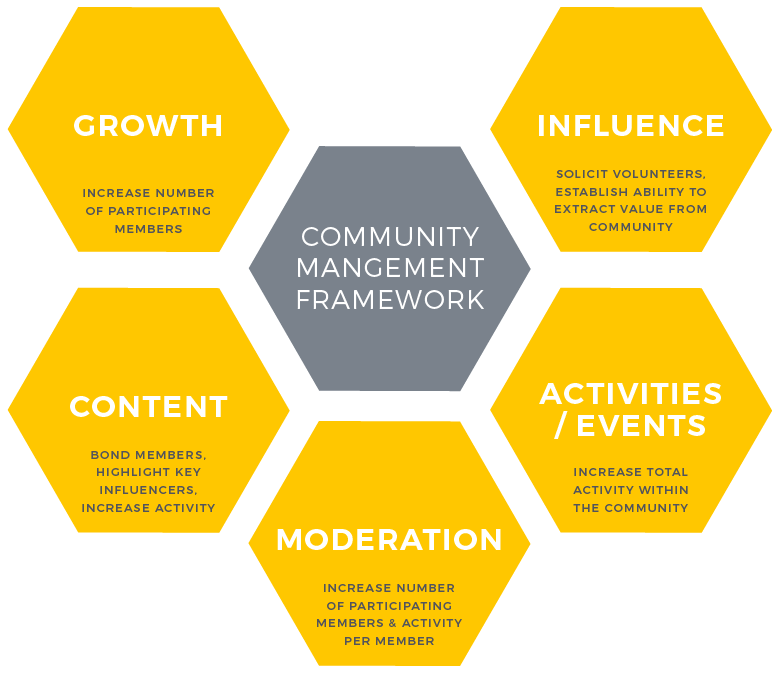
Tactics can fall within several categories of the community management framework. These might be based around growth, content, moderation, participation, events and activities, user experience (or technology), and business integration (anything internal):

framework-hive-diagram

In the last chapter, we reviewed the specific strategies we intend to pursue and what resources we have available for each. This should narrow down possible tactics we can implement to fulfil our strategies.

Stop Doing Tactics Which Are Not Strategic

If the strategy is to make top members feel like a superior, exclusive group of insiders, while ensuring regular members still feel confident to ask questions and respected when they do so. Any tactic which does not match this strategy can be removed.

This might mean cutting the regular newsletters, stopping individual welcomes for every member, stop prompting members to participate. At this stage, we make a lot of very critical decisions about what we will no longer do to focus on the few very big things which have the major impacts.

At this stage, we need to decide exactly what tactics we’re going to use that will have the biggest impact.

Strategy Should Make You Feel Uncomfortable

A good strategy should make you feel uncomfortable.

Your instinct is going to tell you not to take the risk. Your instinct will be to keep doing what you’re doing, or simply try to do everything better. This ‘do everything better’ approach is the worst possible thing you can do.

Trying harder or working better is not a strategy. It might help, to some small degree, but it’s not a strategy. At best, it’s a collection of tactical optimizations. It is more likely to be a continuation of what you’re doing now, not a new strategic direction. This completely fails to achieve the aims of a strategy.

This is where you have to make tough decisions. This is going to make you feel very uncomfortable. You’re not alone here. Everyone who has ever developed a good strategy also needs to make the very same decisions about where to expend limited resources to have the biggest impact.

You will need to stop doing things that seem successful (that you’re used to doing) in order for this strategy to work. The discomfort you feel comes from the very real possibility of making the wrong decisions and pursuing the wrong strategy. This is an unavoidable risk. The best consolation is that this is probably what you are doing today.

You can, however, mitigate this risk by undertaking proper research. Make sure your strategy is not based upon hunches, but upon visible data you have collected. There are no certainties your strategy will work. However, you can ensure you are pursuing the strategy which will allow you the biggest possible odds of success.
Every strategy inherently incurs a risk. But the purpose of a strategy is to embrace this risk, make decisions with the risk in mind, and allocate resources to achieve the biggest impact.

Summary

  1. If your strategy doesn’t make you feel uncomfortable, it’s probably not a great strategy.
  2. If your strategy doesn’t make you feel excited, it’s probably not a great strategy.
  3. A good strategy understands and embraces risk. It allocates resources to win decisive engagements.

Allocate Resources To Strategy

Allocating resources is where you will start to feel the pain of trade-offs. As we noted before, you need to prepare yourself and your stakeholders for what happens when you reallocate your resources.

You’re going to see a drop in some metrics we’re tracking in favor of the metrics that matter. This is to be expected and it is part of the strategy process. You should expect to lose the battles which do not matter much to you. The drop in one or more metrics should be acceptable due to the overwhelming gains in the more critical behavior metric.

Be decisive but not absolutist

The Art Of Strategy

A general doesn’t spread his troops evenly across every battlefield. He decides which battles are worth fighting and allocates his resources to win those battles decisively.

However, a general doesn’t send all his troops onto the battlefield. There is still plenty of other work that needs to be done and positions defended.

While you need to decisively reallocate our resources in favor of your strategy, you still need to keep the community running. Or, more simply, while a strategy should be decisive in nature, it shouldn’t be absolutist in implementation. You still have other work that needs to be done to make it possible to achieve strategic objectives.

For example, it’s great to focus on the super users, but if you allocate 100% of our resources towards them, you will stop attracting newcomers to replace the natural churn of current members.

You might not be helping the regular members who still have simple questions to answer. Likewise, it would be pointless to spend all your time growing the community if there is no-one to answer their questions when they do join.

That would be a sure-fire way to burn through new members.

Decide Resources Before Tactics

You should decide your resource allocation before you decide which tactics to use. It is very tempting to dream of a tactic you wish to deploy first and align everything else to match. This is a mistake. It will lead you to select tactics that are not the best use of your resources.

At this stage, you might want to start breaking your resources down and determine exactly what this means before you get into the tactics. This will later force you to choose the tactics to fit the resources available, instead of adapting the resources to those tactics which sound impressive.

Goal

Strategic Objective

Objective 1 (SO3) Objective 2 (SO2) Objective 3 (SO3)
Increase customer satisfaction Increase the amount of knowledge shared from existing members who create quality content.
(By learning more about their products, customers will be more satisfied with them.)
Ensure the number of newcomers who ask a question stay within 15% of current levels
(This keeps newcomers asking questions in the community and prevents a decline.)
Ensure the overall level of activity of existing members stays within 15%.
(This keeps current members participating at close to current levels.)

Strategic Objective

Weighting

Budget

Time

Attention

Goodwill

All 100% $13,000 40 hours per week 8 group emails per month (for example) 100% (can allocate specific examples)
SO1: Make the top content contributors feel like a superior, exclusive, group of insiders 65% $8,450 26 hours 6 group emails per month about top members Programmer, designer, boss’ permission
SO2: Ensure members still feel confident to ask questions 15% $1,950 6 hours 1 group email per month helping members feel confident N/A
SO3: Ensure members feel respected when they do ask a question 10% $1,300 4 hours 1 group email per month helping members feel respected N/A

Here, you can see how the goals filter down into two key strategic objectives. This, in turn, trickles down into three key strategies. One strategy targets those already creating quality content and aims to amplify their sense of superiority and exclusivity. Another targets newcomers and ensures they feel confident to ask questions. The third ensures members feel respected when they do ask questions (this keeps them highly engaged in discussions).

We can now weight these strategies and allocate resources as we see above. Our main strategy targets existing content contributors. We have allocated 65% of our resources to this. This means $8,450 per month, 26 hours per week, 6 emails per month and our main internal assets.

The other two strategies receive significantly less resources. You might find that allocating resources like this makes you feel uncomfortable. This is a good thing (keeping reading).

Summary

  1. Don’t spread resources thinly across multiple strategies, but allocate resources decisively in favor of a single strategy.
  2. The best results come from committing the majority of your resources to do things extremely well.
  3. Don’t commit all your resources to achieve a strategy. You still need to keep the level of growth and engagement relatively high.
  4. Determine what the total budget, time, attention, and goodwill looks like in reality.
  5. Weight your strategies by the percentage of resources you will allocate to it.
  6. Use this weighting to allocate budget, time, attention, and internal resources.